From research to transformationTatilsepeti redesign was not simply a visual refresh.
It was a multi-layered product transformation shaped by research, product audits, competitive benchmarking, stakeholder insights and continuous design exploration.
My role was to understand where the existing experience was falling behind, identify opportunities within the ecosystem, and turn those findings into a scalable product strategy.
A growing ecosystem, a fragmented experience
The challenge wasn't simply to make the interface look better.
Different products had different interaction patterns, web and mobile experiences were not aligned, and some parts of the product were falling behind current digital travel experiences.
At the same time, the growing product ecosystem made it harder to introduce new features without adding more complexity.
The goal was to create one coherent experience without losing the specific needs of each travel product.
01 — The Challenge
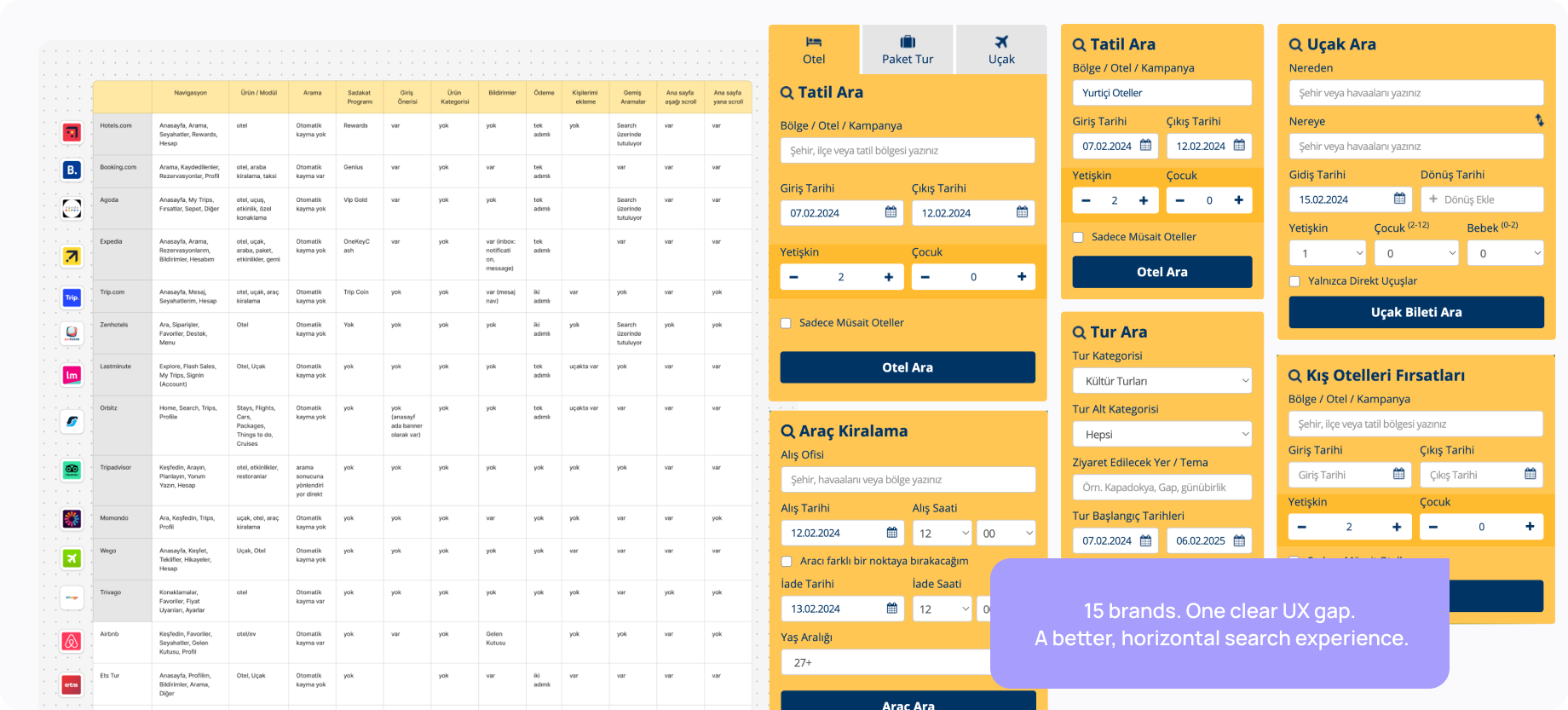
From research to product direction
I joined the project as Design Lead and took ownership of the redesign approach from discovery through design execution.
My contribution covered:
- UX audits across web and mobile
- Competitor and ecosystem benchmarking
- Mapping existing journeys and pain points
- Identifying missing and outdated product patterns
- Defining redesign priorities and rollout phases
- Leading UX and UI design
- Designing new product experiences
- Building a more scalable design foundation
- Collaborating with product owners and stakeholders
Rather than redesigning screens one by one, I focused on understanding the ecosystem first and defining a direction that could scale.
02 — My Role
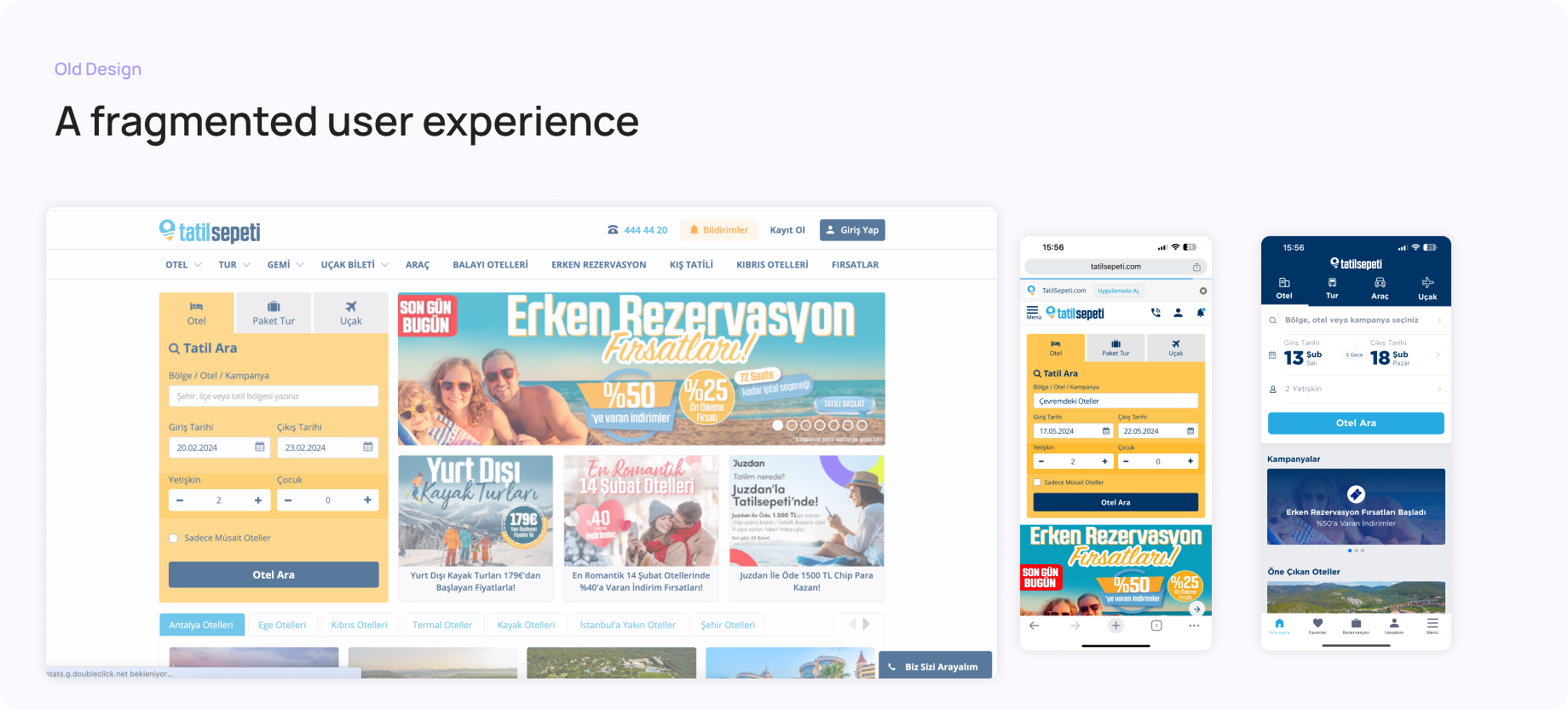
Before designing, I looked at the bigger picture.
I audited the existing experiences across products and platforms, then compared them with leading travel and digital products in the ecosystem.
This helped reveal three key opportunities:
01 — Consistency
Web and mobile needed to feel like parts of the same product.
02 — Clarity
Different travel needs required clearer and more purposeful layouts.
03 — Capability
Some expected features and interaction patterns were missing or behind current industry standards.
These findings became the foundation for the redesign strategy.
03 — Understanding the Ecosystem
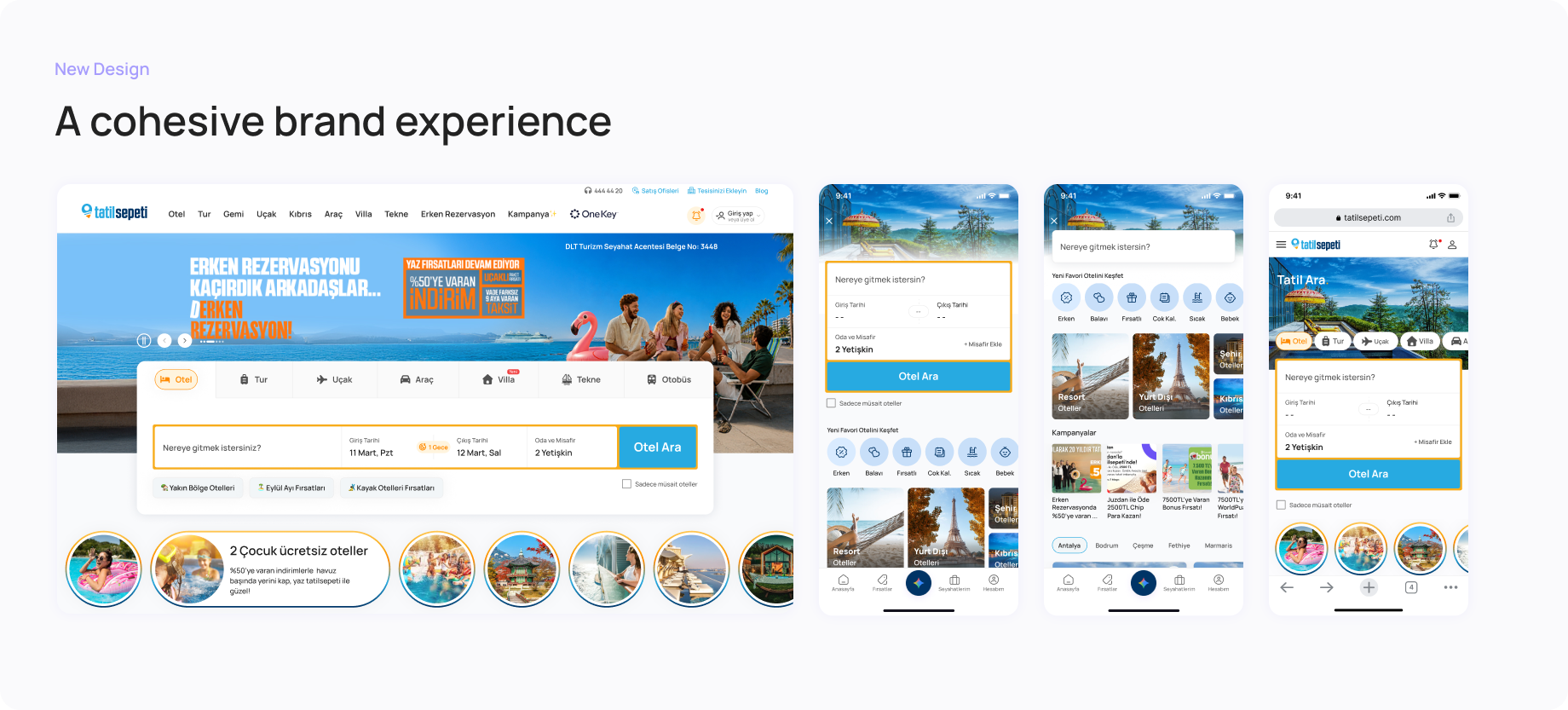
Competitive & ecosystem benchmarking
One of the most visible problems was the difference between web and mobile.
The two platforms had gradually developed their own visual languages and interaction patterns, creating different experiences for the same brand.
I worked toward a shared product language — aligning components, interactions, hierarchy and visual patterns while adapting the experience to each platform.
The goal wasn't to make web and mobile identical.
It was to make them feel like the same product.
And some opportunities revealed the need for new products and experiences that did not exist in the current ecosystem.
Before
Different platforms, different experiences.
After
A more unified and recognizable Tatilsepeti experience.
04 — From Fragmented to Unified
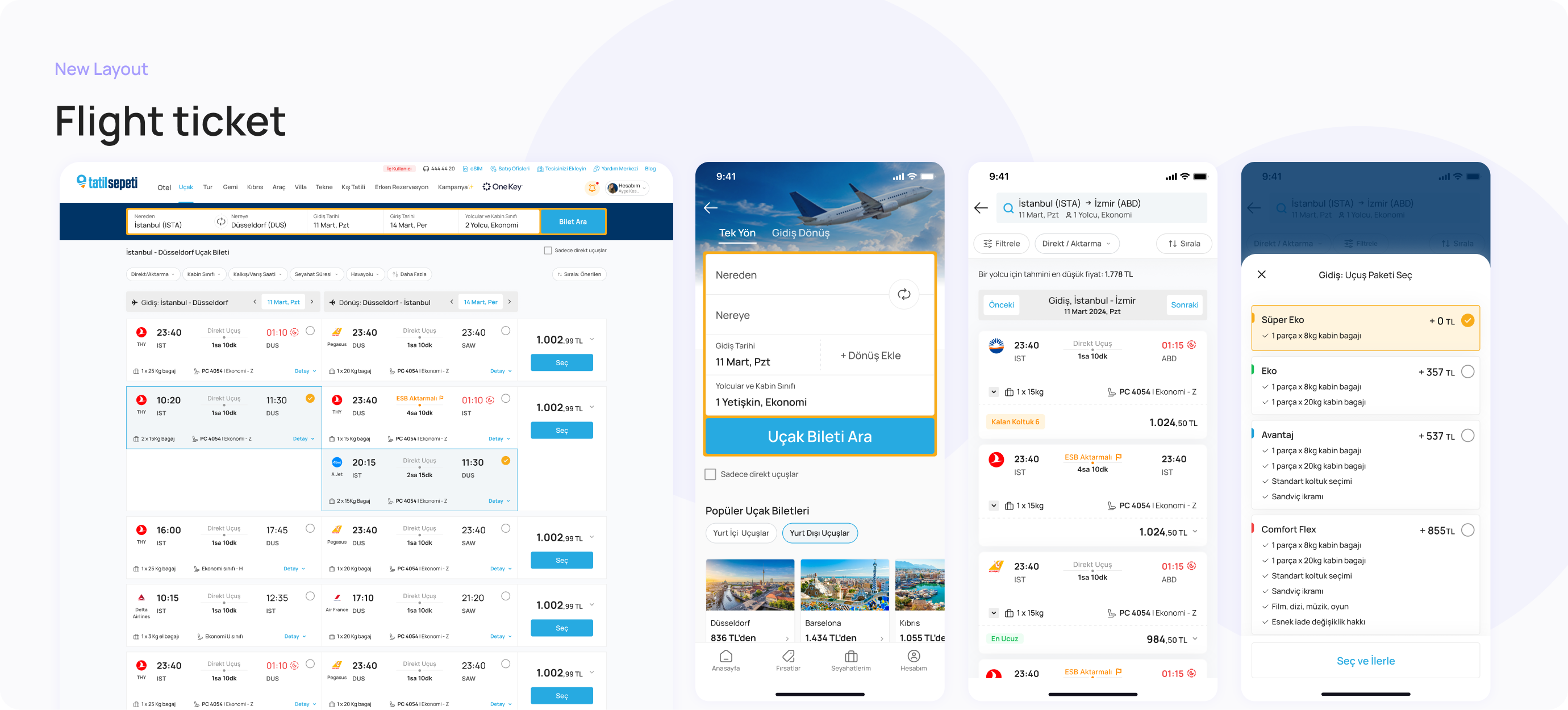
One ecosystem, different ways to travel
A travel platform doesn't have a single user journey.
Searching for a hotel is fundamentally different from finding a flight, planning transportation or discovering a villa.
Instead of forcing every product into the same layout, I created clearer structures around the user's primary need.
Accommodation
The experience focuses on discovering, comparing and selecting the right place to stay.
Transportation
The experience is structured around route, date, availability and travel details.
This approach allowed the ecosystem to become more consistent without making every product feel the same.
05 — Designing Around the User's Travel Need
Redesigning what exists — and building what was missing
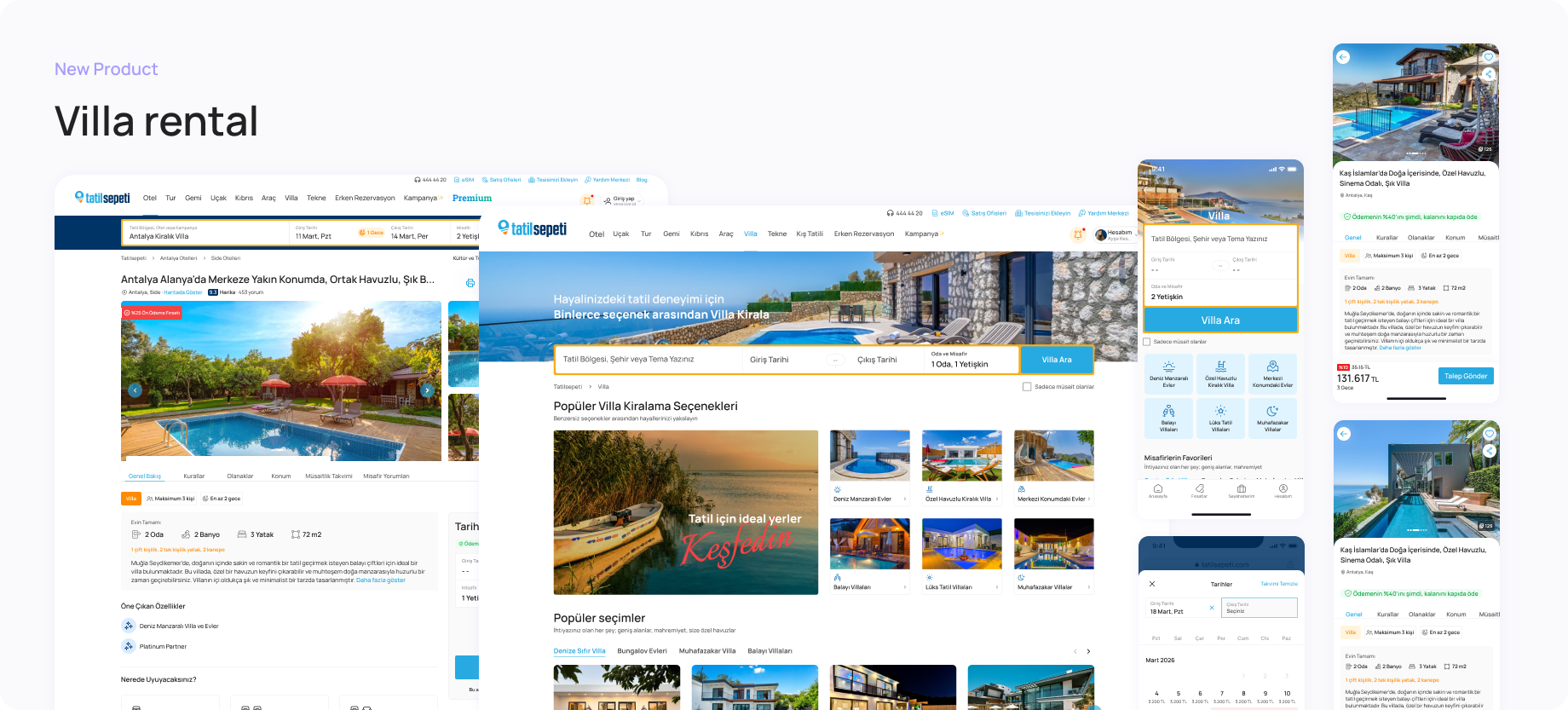
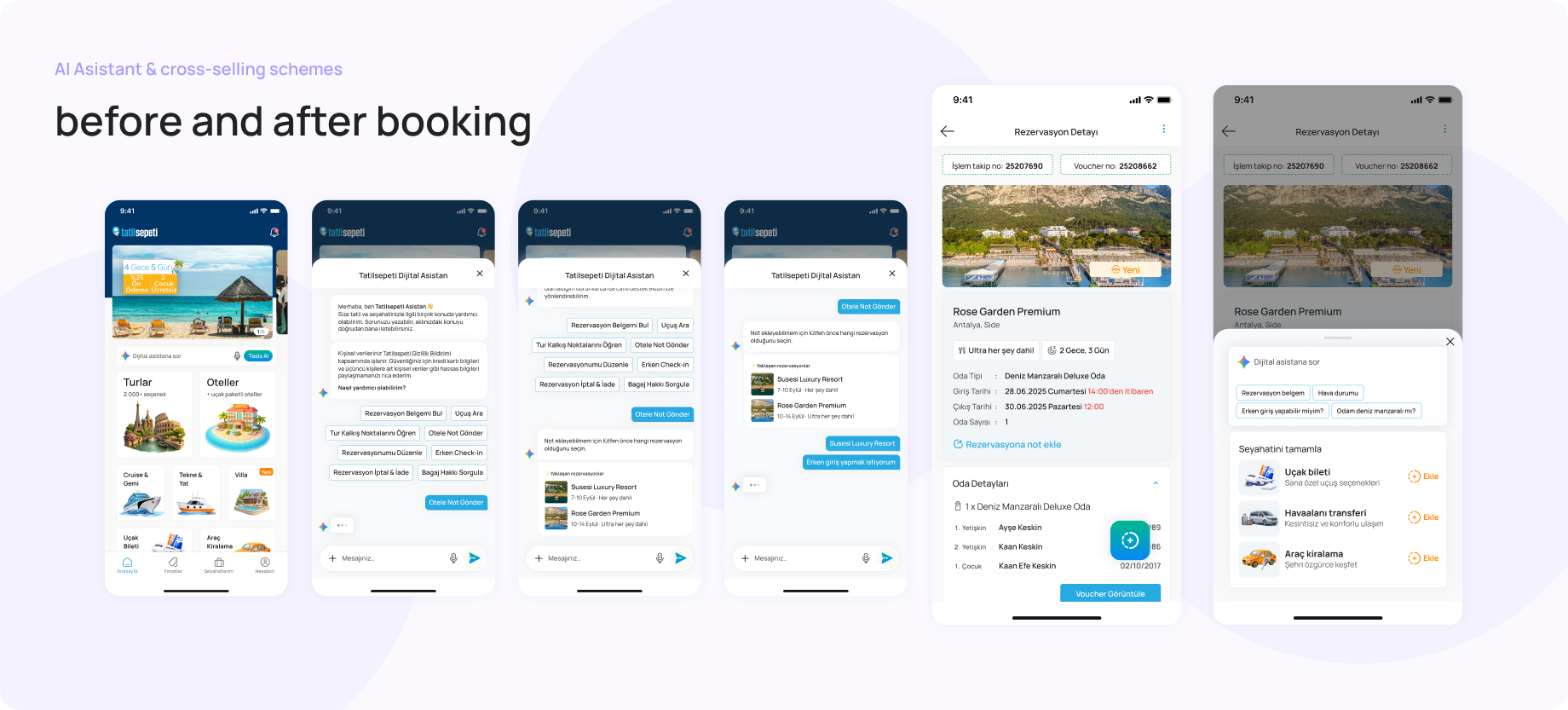
The redesign also became an opportunity to address product gaps.
Through research, audits and benchmarking, I identified features and interaction patterns that could improve the overall experience.
Alongside the redesign of existing products, I also designed new experiences from the ground up — including products such as villas and other emerging travel categories.
Each new product was designed around its own content, user needs and business requirements rather than simply extending an existing template.
06 — From Existing Products to New Experiences
From a collection of products to a more connected ecosystem
The redesign transformed the focus from individual screens to the experience of the entire platform.
We established a more consistent product language across web and mobile, created clearer structures for different travel needs, introduced new product experiences and built a stronger foundation for future development.
Most importantly, the redesign created a direction for continuous product evolution, rather than a one-time visual refresh.
A fragmented ecosystem became a more unified, scalable and future-ready travel experience.
08 — The Result
A modular redesign strategy
Redesigning everything at once wasn't the answer.
I defined a modular approach that allowed the ecosystem to evolve step by step while keeping the experience connected.
Simplify
Make complex journeys easier to understand.
Unify
Create consistent patterns across products.
Scale
Build a foundation that could grow with the product.
The Strategy